I never used to get sentimental. Once something is gone, it's gone, I figured.
The problem is, when someone dies, they never go away. So, I ache for what they deserved and never got, for what we could have had, if one of us, at least, had only known. Try as I might to will them, pray them, or rationalize them away, those aches never go.
That's not what this song is about. But, on a day when ugly greedy, vastly-inferior people show up making demands -- again -- that's what this song ignites in me. Memories. Sentiment. An ache for lost love that haunts me years later. I don't mean romance; I mean the enduring kind -- compassion, sacrifice, friendship, shared pain, shared joy, integrity, loyalty.
These people I miss are not the only people I ever loved but, in their clumsy, imperfect, and now-absent ways, they were the only two people who ever loved me. Dead and gone since 1994 and 2009, forever loved, and forever called to mind by The Innocence Mission and "Martha Avenue Love Song".
EDITOR'S NOTE:In the summer of 2017, I answered the 30-Day Music Challenge on this blog. I'll be reupping the best of those posts from time to time.
27. A song that breaks your heart.
Ah, these people.
The thing is, I understand these people. I'm pretty sure I used to be one. I'm pretty sure I'm a recovering "these people", which means there's no used-to-be about it.
See, you grow up with someone who says and does nice things just to get something out of you. Then, they stop doing and saying nice things -- just to punish you for not playing the game by their rules. Just to show you who's boss. Or whatever. What you understand then, beyond the shadow of a doubt, is that they mean to harm you.
When they swing back to being nice, you forget who they were until they remind you with some exquisitely-designed humiliation. Some people figure it out. More people go to their graves wondering why.
You grow up, and when you meet a genuinely-kind person -- and kind, unlike nice, is never superficial -- you can't tell whether they're trying to manipulate you or just being themselves. So you lash out, even when they're so loving it hurts. Even when the air between you is emotionally neutral.
If you're smart, if you're lucky, you grow out of it. If you're really lucky, someone wise tells you the key is to trust someone until they prove that you can't. If you're really, really lucky, someone tells you that both hurting others and being hurt by them are unavoidable parts of life.
If you decide to be kind without evidence, you get what this song offers. And you get more of it than you ever thought possible.
There are at least ten books that, by the time I finished them, had completely upended my understanding of myself and the world around me. These are they.
The list is here because it contains some seminal works on popular music. Feel free to ignore the tomes on social justice if you didn't ask for my opinion on such things.
In chronological order of reading, best as I can remember.
Take Wing; Jean Little: Even though there were other (visibly) disabled kids in my class, I felt I was the only one. Jean Little's best book, about a girl with a learning-disabled brother, made me realize that other kids coped with disability -- and were desperate to hide it. Take Wing hit me like a bomb. It is, hands down, the book that made me love reading, way back in fourth grade.
The Poetry Of Rock; I was a classically-trained flautist who didn't start singing until she was fifteen. What I didn't know about the crucial importance of lyrics, this book taught me. It would be decades before I could explicate this way of thinking to others. Side note: My copy of this is dissolving as I write.
That Man Cartwright; Ann Fairbairn: Two lessons -- wait, no, three -- I learned from this book: One: Change will never come about if you only hang with the, er, cool people, or those who think like you. Two: Going along to get along exacts a terrifying cost that everyone in your orbit ends up paying. Three: Justice for farmworkers means justice for everyone who consumes the fruits of their labor. This is true in the most concrete and immutable way possible. Don't believe me? Read this book, then think hard -- really hard -- about the constant spate of produce recalls we see today.
The Rolling Stone Record Guide; Various: As much as I hated Rolling Stone's chest-pounding, provincial style, the magazine -- and, by extension its first record guide -- introduced me to a way of writing about music that directly impacts my work today. Despite what crabby commentators like Steve Allen said, rock and roll could often be counted on to reveal a rich inner life and exceptional cultural literacy; as well as an activism informed deeply by established knowledge and lived experience, on the part of its creators. Attention must be paid, they insisted. I haven't stopped paying attention since.
The Name Is Archer; Ross MacDonald: I didn't have to read books to know that some people did evil because it was fun (The First Deadly Sin, Lawrence Sanders). I didn't have to read books to know that a parent could be the devil incarnate (Iceberg Slim's Mama Black Widow). I didn't have to read books to know that kids could be thrown in the trash because it was convenient (Bel Kaufman's Up The Down Staircase, Stephen King's Carrie). I did have to read a book to know that, somehow, somewhere, there were adults who gave a rip. And I had to read it over and over again. This collection of short stories, featuring detective, Lew Archer, yet another survivor of a rough childhood, was that book. I've only just now remembered that I found it because someone in Rolling Stone mentioned MacDonald's heart for maltreated kids, as expressed in the California-centered Lew Archer stories. I have no idea who that person was, but I am eternally grateful.
Tales From A Troubled Land; Alan Paton: From the days when art and literature from South Africans of color (U. of Chicago prof, Denis Brutus, was a notable exception) weren't getting through to the States. South African-raised Englishman, Paton, avoids the privileged-yet-earnest white activist traps of broad characterization, either/or thinking, and sweeping generalization. Paton knows the emotional terrain because he lived with and loved deeply South Africa's people of color. Their experiences were his unshakable, true north, and his writing taught me never to accept anything less from my own. Today's activist authors rely on The Times (pick a major, metro area) and NPR for their talky, tired, impotent change-being. They get book deals and literary prizes for it, too. Paton puts them all to shame.
Gentlemen's Agreement; Laura Z. Hobson: More than just how bigotry looks, Gentlemen's Agreement is about how bigotry thinks -- and, in the most rarified circles. It helped me home in on the qualities of human interaction on race and creed that just seemed ... off. Surprisingly, for a book about ideas, this is a book of profound humanity. Surprisingly, for a book about a bunch of New York swells, it's a book that stays blessedly down to earth.
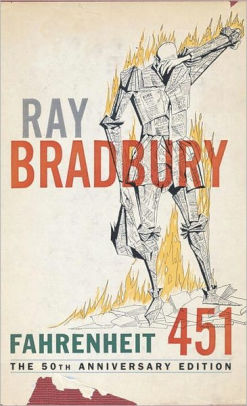
Fahrenheit 451; Ray Bradbury: Censorship? No. Fahrenheit 451, first published in 1953, is about the consequences of thinking -- and doing -- for yourself in the age of Internet and reality TV. Shatteringly prescient.
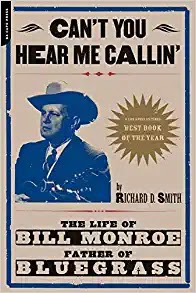
Can't You Hear Me Callin'; Richard D. Smith: I was not a fan of musical biographies. Even the high-falutin' ones seemed to focus exclusively on their subjects' sex lives in order to obscure the authors' inexcusable ignorance of the fundamentals of music, and of creativity itself. Not so Richard D. Smith's towering biography of the Father of Bluegrass Music, Bill Monroe. Smith understands Monroe's earth-shattering, musical creation in a way that bluegrass musician/authors like Neil Rosenberg, and musical dilettantes like Ted Lehmann and Kim Ruehl of No Depression fail to do to this day. Are the sex, the soap operas, the struggles, and the spite still here? Yes, they are, in authoritative detail. But, if you want to understand bluegrass music better than anyone else on the festival circuit, there is no other -- or better -- book.
The Bible: Right. Don't @ me. See, if someone spends your childhood telling you that you must live by this book, or perish; if, decades later, you discover that a bunch of someones spent your childhood lying to you about what's in this book you must live by, or perish; when you finally read the entire book for yourself, it is life-changing. In my case, so much so that I now live by an almost entirely-different set of rules than those with which I grew up.
Today is one of those "Do you remember where you were when ...?" days.
I don't want to remember, but I know that forgetting brings more days like these.
I was living with my parents, having tacked on an extra semester of school so I could take advantage of my dad's medical and dental insurance. Wisdom teeth, don'tcha know?
I had no job, but I did have a little transistor radio my dad had scrounged up. It was my habit, right before I turned out the lights, to switch my radio on, and turn the dial until I'd heard a couple of favorite songs to cool me out.
And so, I turned the radio on.
Beatles. Cool. I turned the dial. More Beatles. All Beatles. Only Beatles. And John Lennon.
Just a few years before, someone had offered the former Beatles an outrageous sum of money to reunite.
They said no at the time, but maybe, it was that.
Or, it was bad.
My mother knocked. Have you heard?
Heard what?
John Lennon was shot.
Is he dead?
She nodded.
I had a huge, cozy, pile bathrobe the color of a swimming pool, of Indian turquoise. The pile was flattened along the seam of the tie belt. I kept looking at it, how wrong it was, not remembering that it had always been that way.
It couldn't be real. They'd say it was a mistake, that John -- what an outrageous liberty to even think of him on a first-name basis -- had pulled through.
Eventually, someone in the radio spoke. They had facts, times, a press conference with a doctor.
The doctor.
I had a class -- History of Rock 'n Roll. I'd been assigned an oral report as a final project -- The History of The Who. It was to last three days, include audio and video.
In the afternoons, I'd go to the music library, check out a set of headphones, put a homemade Who cassette into the deck, and write. On December ninth, the music played dead, and the words refused to come.
I sat outside on the patio, listening to the DJ spin Beatles tunes on the campus radio station. In the days following, I bought every commemorative magazine I could get my hands on.
The irony is that John Lennon wasn't that awesome. Shunted off to a humorless aunt by feckless, self-centered parents, Lennon was an outlier in a society that hated them, and does to this day.
He was angry, and stayed that way. He hit women, said ugly things about his ex-BFF for the whole world to hear. He helped break up The Beatles for the sake of a sleazebag manager. And, when he got curious about Christianity, he called on Jerry Falwell -- one of the most vile professing Christians who ever lived.
The further irony is, unlike some with similar histories, he kept trying to be a better man. His words and music are a living record of that struggle.
In his place, we have some guy who talks shit, and says he knows Jesus.
We'll see about that, but I digress.
We have a below-average, allegedly-schizophrenic nothingburger who decided that John Lennon had something he wanted, and the only way to get it was by murdering an ex-Beatle (Hey, hey, NRA!).
So, he bought a gun. Because, if you're the one holding the gun, you're the expert.
You're the superstar.
John Lennon spent his life looking for some light, so I'd be remiss if, while remembering him, I didn't look for some, too.
So, I see Yoko Ono, who, in the crone phase of life, has surely become the hippest crone whoever lived.
I see a piece of Central Park, where beautiful things grow. Its name is Strawberry Fields.
A living record of John Lennon's struggle. Of ours.
It might not be good to remember all that, but it is necessary. In these times, when the powers that be insist that we can't, shouldn't, don't, and had better not remember, it is an act of defiance.
Johnny would have liked that.
And so, in memory of good dreams and bad, in memory of him, here's a song from the first John Lennon record I ever had.
My poor dad! He had a voice like Jimmy Martin's. He wanted to be Eddy Arnold.
To this day, I prefer Jimmy Martin, but there's something magical about this song, which my dad had the good sense to never attempt.
When I was in high school, we went on a church retreat of sorts to Squaw Valley. While we were there, we saw Eddy Arnold at Harrah's in Lake Tahoe (We were clearly not Baptists), with some neighbors who had moved to Sparks, Nevada years before. Naturally, Arnold sang this song. It was as evocative as I remembered.
29 years ago today, I married the best friend I ever had.
32 years ago, I first heard this song, at a time in my life when I felt as though I was drowning. Turns out, it was the life raft that was pulling me under.
24 years after I first heard this song, I met the One who had said these words to the songwriter. I was stunned to discover that it was Jesus, and that He did not hate me. I still have trouble believing that at times.
29 years after I first heard this song, I discovered that it's people who are supposed to do these things for each other; we're not supposed to wait for some Santa Claus in the sky to alleviate the suffering in this world. I still follow Jesus. When it comes to other people, I am a stone-cold atheist (Antihumanist? Apeopleist?)
39 years after I first heard this song, I discovered that helpers are fewer and farther between as time goes on. When you meet one, hold onto them for dear life. Forget the stuff that hurts, the stuff everybody else thinks is important. If someone helps you and keeps helping you, don't let go.
Two years after I first heard this song, I discovered that helping others costs you less and gives you more than you think it will. The man who wrote this song also wrote "It's no secret that a friend/Is someone who lets you help". He was right.
26 years after I first heard this song, I discovered that, if help is not mutually given and received, the relationship is toxic, and it will kill you if you don't get out.
Here's U2 with a song that makes me think about life. This is "Drowning Man".
Now we're talking! The 70s were my time. There are hundreds to choose from, but the one I always think of was the first record I wasn't allowed to buy.
"Well, what does it mean?" my mother asked and, in one respect, it was a legitimate question. The band themselves didn't know what the song meant. They were Dutch, and were taught -- badly -- to sing it phonetically. "A Godness on a mountain top/Burnin' like a silver flame", Mariska Veres sang.
The word, of course, should have been "goddess".
"And Venus was her name".
Like most of us, Mariska Veres got older and chubbier. She died in 2006 of gall bladder cancer, just three weeks after she was diagnosed.
She was still a goddess, even then. And these are still some of the hottest riffs in all of rock 'n roll.
This was one of my husband's most favorite songs. He and I played a recording of it as they put our dog to sleep. My husband passed 10 months and 16 days later -- three days before his 50th birthday.
It depends, doesn't it? City or country? Day or night? Hot or cold?
Okay, I'll pick one: Chilly. Morning, none too early. The off season, a little rainy. Cruising up Highway 1, finally out of the city. Headed north, toward the wine country with the best friend I ever had.
I never felt so safe, so loved, so perfect -- before or since.
This was always the first CD in the player. This, the opening track.
The Darol Anger/ Barbara Higbie Quintet with "Egrets".
I discovered The Beach Boys about 10 years after they released this record. It was summer, of course; how could it not have been?
I had heard "Surfin' Safari" on an oldies station that never seemed to play The Beach Boys' best work. I was not impressed.
Imagine, then, hearing "California Girls", "Good Vibrations", "The Spirit of America", and this one, for the first time. The sublime harmonies, the symphonic arrangements! There was so much to hear that it seemed like I'd never get to the bottom of their songs.
I'd been raised on classical music, but when I heard -- really heard -- The Beach Boys for the first time in the summer of 1975, I was a goner.
I mean, sure, this record sounds raw, vulnerable, and true, and everybody uses those words to describe art.
It's another thing altogether to do them -- to live them -- in public. This is what blue, in its alternate meaning sounds like, feels like, hurts like.
It takes guts.
There are those who would shun these expressions from a loved one in an effort to be reasonable. Avoid such people. It should hurt when your partner has to leave.
This is Emmylou Harris, complete with cracks and pops, singing "Blue Kentucky Girl".
When I was over on Tumblr, and this blog was called first Bluegrass Bohemian, then Bluegrass Universe, and finally, Sunday Is For Sounds, I did this challenge. There was no cool graphic associated with it then.
In any case, I thought I'd do it again. Only, instead of posting all my answers at once, you'll get a new video every day, with a reminder of the challenge for that day.
I have been to Lake Elsinore only once. I was about nine years old, and the occasion was a picnic with my parents' oldest friends, and some friends of theirs. If I had known what was lurking there, I would have begged off with some sudden, mysterious ailment.
Luckily, I never encountered Elsinore's fabled tarantulas -- or their equally-storied natural predators, tarantula hawks -- except in gossip shared by horrified acquaintances, just a few years ago.
When I put it all together, I knew that, if Shakespeare's Hamlet had found himself parked at the Elsinore in Riverside County, he'd have known exactly what to do.
And by the way, you sulky brat, Check out the 3-inch-long, parasitic wasp winging your way
Here's the cast of the brilliant, Canadian TV series, Slings and Arrows, with another suggestion: "Cheer Up, Hamlet".
This is the first record I ever heard on a CD player, and the experience still stuns me. That drum break is everything -- the song's high point.
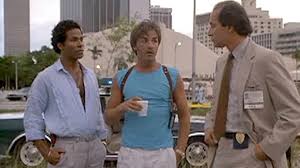
It's funny, I remember that this was used in Miami Vice more than I remember the episode itself. This was the pilot episode, and, Google tells me, the 32nd anniversary of its debut is this Friday, September 16, 2016.
Perhaps the reason I associate this song so closely with Miami Vice is that it was also used in the fourth episode of that inaugural season. I wish I hadn't had to sell those DVDs.
In any case, Phil Collins and Miami Vice seemed made for each other back then.
No, this post isn't going anywhere, but I don't need it to -- not today.
Then again, maybe it is. Maybe the point is that some things are just made for each other, and we shouldn't try to pretend otherwise. It's good when things match up, go together, and stay together. People, too, but now I am digressing -- although that's a subject I'm inclined to stick with whenever I get the chance.
Anyway, this is Phil Collins, with a song that still sounds momentous and full of foreboding, "In the Air Tonight".
The very first thing I remember about Marni Nixon, who died on July 24, was this: She was the voice of Mary Poppins on the Disneyland Records compilation of songs from the film.
I was awfully young -- I must have been about six years old when the record was released. I don't know what possessed me to read the record labels (I had more than one of the singles), except that I read everything I could get my hands on. All I know is, those record labels formed an impression of Marni Nixon that would last for years.
The next thing I remember about Marni Nixon is that she had come to my college to give a master class. Please! I was digging The Who and The Buffalo Springfield, plus whatever indie/punk/jazz fusion stuff my far-edgier friends could throw at me. Why would I want to spend two stultifying hours listening to the no-doubt saccharine singing advice of Mary Poppins?
Probably because every other voice major was planning to. In any case, I went.
I only remember two things about that class. The first was that sweet, Julie Andrews lookalike casually eviscerating the student accompanist's "cocktail piano". The second was her seen-it-all approach to the "Black Swan" aria from Gian Carlo Menotti's The Medium, whose first lines are:
The sun has fallen and it lies in blood.
The moon is weaving bandages of gold.
O black swan, where, oh, where is my lover gone?
It didn't seem to matter that the vocal department's reigning diva was trying not to quake in her boots. The aria was wrong, and Marni Nixon was ready to take it apart.
I was just another wide-eyed voice major in the auditorium, glad for once not to be sitting in the front row, but Marni Nixon taught me a lot that day.
She taught me that you could look and sound fragile without breaking. She taught me that you could look and sing like an ingenue and still call others to task for faking it, ingenue roles be damned. She taught me that you could explore ugly, painful subject matter, even as people continued to underestimate you and your unimpressive baby face.
I did not realize at the time how much Marni Nixon had taught me, or that she had taught me anything at all. But, I look back now, and see that those hard lessons came from her and her alone. For that, I am eternally grateful.
Rest in peace, Ms. Nixon. Wherever you are, they've finally stopped underestimating you.