Showing posts with label classic rock. Show all posts

Wednesday, October 30, 2019

Attenuated

The very first time I heard Eric Clapton, he was screaming. His band screamed right along with him.

That was "Layla". It was a sound I wanted more of. It is one of the songs that affects me today the same way it did when I first heard it, all those years ago.

Funny, that's the precise feeling Clapton talks about in this song, even though it could not be more opposite "Layla" in spirit.

This is Eric Clapton with "Rock and Roll Heart".


Friday, October 11, 2019

An Agrarian Murder Ballad

Despite being a classically-trained flautist, I'm enough of a purist to wish there were no flute in this performance. It all sounds a little too Ron Burgundy for me -- that'd be the titular character in the hysterical, 70s schlockfest, Anchorman: The Legend Of Ron Burgundy. The film is worth seeing if you haven't, but it's made me slightly appalled to have been a flute player ever since.

Anyway, this fascinating tale is Traffic's agrarian murder ballad, "John Barleycorn".

Empty and Aching

The late Maya Angelou once wrote, "I've learned that you shouldn't go through life with a catcher's mitt on both hands; you need to be able to throw something back."

It's a good lesson for folks in their 20s to learn -- that, in order to get, you have to give, too. Simon and Garfunkel were in their 20s when they recorded this song, but by the time the story ends, they had yet to learn the valuable lesson about giving and getting. They started out to "look for America" with their hands out. They ended up the same way.

Kathy, I'm lost, I said
Thought I knew she was sleeping
I'm empty and aching
And I don't know why
The question of why is a fine thing to answer in your 20s and 30s. Sometimes, finding the answer can be the stuff of a midlife crisis; but some get through their 40s and 50s and beyond without ever having answered it.

Counting the cars
On the New Jersey Turnpike
They've all come to look for
America

That might be one clue: Shutting yourself up in your car, doing your own thing and taking your own journey year after year is a good way to avoid the truth. Opinions, they say, are like navels: everyone has one. And everyone is willing to offer you theirs. If you're staring 50 or 60 in the face without having discovered how to fill the emptiness that everyone feels at one time or another, maybe it's because you stopped listening to good advice a long time ago. Probably because that oh-so-helpful advice always has to do with sacrificing yourself to something, someone, or Someone greater than yourself.

Of course, it's always possible that you've never received good advice.

You know what they say about that: "If you want something done right, do it yourself."

Here are Simon and Garfunkel, badly in need of some good advice -- or maybe just a well-stocked public library -- singing all about "America". Gee, maybe this whole album is about the American disease.

Hero Takes A Drink

I love this song because it is so. dang. country.

I love the way these guys -- all four are credited as composers of this track -- plant us right smack in the middle of their seedy, Southern short story with minute, literary details: "Lookin' at your watch a third time/Waiting at the station for the bus" and "Goin' where nobody says hello/They don't talk to anybody they don't know".

I do not, however, love their protagonist, who confesses that, "At night I drink myself to sleep/And pretend I don't care that you're not here with me," never once imagining that his problem drinking might be the reason his special friend went to Rockville in the first place.

Like all addicts, he's also addicted to his own personal drama: "But somethin' better happen soon/Or it's gonna be too late to bring me back".

Oh, cue the violins, you emo squirt.

They were young when they wrote this, R.E.M. How else to explain the presentation of naked, emotional blackmail as a romantic gesture?

Here's R.E.M., in a bid for your sympathy with "(Don't Go Back To) Rockville".

't

Rod Stewart B.D. (Before Disco)

My favorite Rod Stewart song ever.

Yes, children, once upon a time, Rod Stewart sang songs that could make you think as well as feel, and that’s the only reason I have a favorite song of his. There was a Rod Stewart before “Hot Legs” and “Da Ya Think I’m Sexy”.

No wonder he turned to the Great American Songbook. Imagine having to serve up that late-70s dreck night after night.

Anyways, here’s Rod Stewart with “Handbags and Gladrags”.

Anytime an oboist helps kick off a rock ‘n’ roll record, it’s a good day.

A Well-Oiled Soul Machine

The epitome of white soul singing and keyboard playing, right here. Better than Leon Russell ever was, too – more driven, less self-indulgent, not a wasted note.

In fact, everyone in this band seems to know what to play and when to play it. I am DYING over those marching-band licks from Michaels' long-time drummer and indispensable musical partner, Frosty. DYING over the way the bass player is right there with him on those paradiddles. Their musical gears mesh, and the result is a well-oiled soul machine that’s funky as hell.

This is Lee Michaels with “Do You Know What I Mean?”

In other news, I share a birthday and a birthplace with the talented Mr. Michaels.


Wednesday, August 21, 2019

30-Day Music Challenge: Day 27


EDITOR'S NOTE: In the summer of 2017, I answered the 30-Day Music Challenge on this blog. I'll be reupping the best of those posts from time to time.

27. A song that breaks your heart.

Ah, these people.

The thing is, I understand these people. I'm pretty sure I used to be one. I'm pretty sure I'm a recovering "these people", which means there's no used-to-be about it.

See, you grow up with someone who says and does nice things just to get something out of you. Then, they stop doing and saying nice things -- just to punish you for not playing the game by their rules. Just to show you who's boss. Or whatever. What you understand then, beyond the shadow of a doubt, is that they mean to harm you.

When they swing back to being nice, you forget who they were until they remind you with some exquisitely-designed humiliation. Some people figure it out. More people go to their graves wondering why.

You grow up, and when you meet a genuinely-kind person -- and kind, unlike nice, is never superficial -- you can't tell whether they're trying to manipulate you or just being themselves. So you lash out, even when they're so loving it hurts. Even when the air between you is emotionally neutral.

If you're smart, if you're lucky, you grow out of it. If you're really lucky, someone wise tells you the key is to trust someone until they prove that you can't. If you're really, really lucky, someone tells you that both hurting others and being hurt by them are unavoidable parts of life.

If you decide to be kind without evidence, you get what this song offers. And you get more of it than you ever thought possible.

This is Neil Young with "Peace of Mind".


Thursday, July 18, 2019

Ten Books That Changed My Life

There are at least ten books that, by the time I finished them, had completely upended my understanding of myself and the world around me. These are they.

The list is here because it contains some seminal works on popular music. Feel free to ignore the tomes on social justice if you didn't ask for my opinion on such things.

In chronological order of reading, best as I can remember.


Take Wing; Jean Little: Even though there were other (visibly) disabled kids in my class, I felt I was the only one. Jean Little's best book, about a girl with a learning-disabled brother, made me realize that other kids coped with disability -- and were desperate to hide it. Take Wing hit me like a bomb. It is, hands down, the book that made me love reading, way back in fourth grade.


The Poetry Of Rock; I was a classically-trained flautist who didn't start singing until she was fifteen. What I didn't know about the crucial importance of lyrics, this book taught me. It would be decades before I could explicate this way of thinking to others. Side note: My copy of this is dissolving as I write.


That Man Cartwright; Ann Fairbairn: Two lessons -- wait, no, three -- I learned from this book: One: Change will never come about if you only hang with the, er, cool people, or those who think like you. Two: Going along to get along exacts a terrifying cost that everyone in your orbit ends up paying. Three: Justice for farmworkers means justice for everyone who consumes the fruits of their labor. This is true in the most concrete and immutable way possible. Don't believe me? Read this book, then think hard -- really hard -- about the constant spate of produce recalls we see today.

The Rolling Stone Record Guide; Various: As much as I hated Rolling Stone's chest-pounding, provincial style, the magazine -- and, by extension its first record guide -- introduced me to a way of writing about music that directly impacts my work today. Despite what crabby commentators like Steve Allen said, rock and roll could often be counted on to reveal a rich inner life and exceptional cultural literacy; as well as an activism informed deeply by established knowledge and lived experience, on the part of its creators. Attention must be paid, they insisted. I haven't stopped paying attention since.


The Name Is Archer; Ross MacDonald: I didn't have to read books to know that some people did evil because it was fun (The First Deadly Sin, Lawrence Sanders). I didn't have to read books to know that a parent could be the devil incarnate (Iceberg Slim's Mama Black Widow). I didn't have to read books to know that kids could be thrown in the trash because it was convenient (Bel Kaufman's Up The Down StaircaseStephen King's Carrie). I did have to read a book to know that, somehow, somewhere, there were adults who gave a rip. And I had to read it over and over again. This collection of short stories, featuring detective, Lew Archer, yet another survivor of a rough childhood, was that book. I've only just now remembered that I found it because someone in Rolling Stone mentioned MacDonald's heart for maltreated kids, as expressed in the California-centered Lew Archer stories. I have no idea who that person was, but I am eternally grateful.


Tales From A Troubled Land; Alan Paton: From the days when art and literature from South Africans of color (U. of Chicago prof, Denis Brutus, was a notable exception) weren't getting through to the States. South African-raised Englishman, Paton, avoids the privileged-yet-earnest white activist traps of broad characterization, either/or thinking, and sweeping generalization. Paton knows the emotional terrain because he lived with and loved deeply South Africa's people of color. Their experiences were his unshakable, true north, and his writing taught me never to accept anything less from my own. Today's activist authors rely on The Times (pick a major, metro area) and NPR for their talky, tired, impotent change-being. They get book deals and literary prizes for it, too. Paton puts them all to shame.


Gentlemen's Agreement; Laura Z. Hobson: More than just how bigotry looks, Gentlemen's Agreement is about how bigotry thinks -- and, in the most rarified circles. It helped me home in on the qualities of human interaction on race and creed that just seemed ... off. Surprisingly, for a book about ideas, this is a book of profound humanity. Surprisingly, for a book about a bunch of New York swells, it's a book that stays blessedly down to earth.


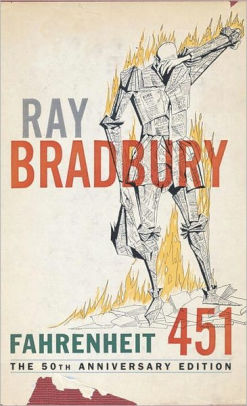
Fahrenheit 451; Ray Bradbury: Censorship? No. Fahrenheit 451, first published in 1953, is about the consequences of thinking -- and doing -- for yourself in the age of Internet and reality TV. Shatteringly prescient.


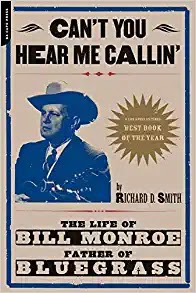
Can't You Hear Me Callin'; Richard D. Smith: I was not a fan of musical biographies. Even the high-falutin' ones seemed to focus exclusively on their subjects' sex lives in order to obscure the authors' inexcusable ignorance of the fundamentals of music, and of creativity itself. Not so Richard D. Smith's towering biography of the Father of Bluegrass Music, Bill Monroe. Smith understands Monroe's earth-shattering, musical creation in a way that bluegrass musician/authors like Neil Rosenberg, and musical dilettantes like Ted Lehmann and Kim Ruehl of No Depression fail to do to this day. Are the sex, the soap operas, the struggles, and the spite still here? Yes, they are, in authoritative detail. But, if you want to understand bluegrass music better than anyone else on the festival circuit, there is no other -- or better -- book.

The BibleRight. Don't @ me. See, if someone spends your childhood telling you that you must live by this book, or perish; if, decades later, you discover that a bunch of someones spent your childhood lying to you about what's in this book you must live by, or perish; when you finally read the entire book for yourself, it is life-changing. In my case, so much so that I now live by an almost entirely-different set of rules than those with which I grew up.


Saturday, June 29, 2019

Fourth of July Playlist


Independence Day, irony-free. Have a great Fourth of July.

This Land Is Your Land; Woody Guthrie: Forget the millennial irony; this is the truth, and we're allowed to act like it. Never settle.


Good Timing; The Beach Boys: 🎶We're all learning.🎶


Saturday In the Park; Chicago: Here's to a real celebration, and a different kind of jazz fusion.


Philadelphia Freedom; Elton John: By, for, and about immigrants, whose experience should never not be this joyful. It's on us.


Free To Be You and Me; Marlo Thomas and Friends: Organ (Just listen to that intro), banjo, and string orchestra. It doesn't get more American than that.


You Go To Your Church; J.D. Crowe: Bluegrass, that most conservative of genres, is also the most traditional. Accordingly, here's a song about freedom of religion.


Crow Black Chicken; The New Lost City Ramblers: From hunger. The exultations and sorrows of growing your own food, and the fantasies born of food insecurity (🎶If I had a big frame house/Eighteen storeys high/Ev'ry storey in that house/Be packed with chicken pie🎶).


Pretty Saro; Elizabeth LaPrelle: Most of our folk songs are immigrants, too; as is this Gaelic singing style.


Dancing In the Streets; Martha and The Vandellas: A roll call of America's great cities, with an acknowledgement of the struggle. If "It doesn't matter what you wear/Just as long as you are there", then it's okay to be poor and still show up. 


Black Coffee; Humble Pie: Because we're inveterate self-promoters, too. Steve Marriott's joyously confident take on the Ike and Tina Turner classic is a terrific example.


Friday, June 21, 2019

Emo Americana Summer Playlist


Lemony cologne. Picnic blankets. Potato salad. No-bake cookies. Open windows. Ice by the bucketful. Fireworks. Bug bites. Sea and Ski "Suntan Lotion". Those dreams where you feel like you're being tossed by ocean waves whenever you turn over in your sleep. And these songs.

Memories of summer.

Gotta Travel On; Bill Monroe: Some people never shake that itchy, spring-into-summer feeling. Bill Monroe gives himself away, redeeming a song from the Folk Scare in the process.

Twelve Thirty (Young Girls Are Coming To The Canyon); The Mamas and The Papas: I see two sides to this one -- the terrible fates that befell so many of the girls, and a repressed narrator experiencing a summer of the spirit, if you will.

The Poacher; Ronnie Lane and Slim Chance: Gorgeous orchestration; the notes skip like sunlight on the water. Is this the harsh reality of an otherwise gentle, English summer?

City Folks Call Us Poor; Larry Sparks, feat. Cheryl and Sharon White: Ex-Clinch Mountain Boy, Larry Sparks, describes, in loving detail, the kind of summer not everyone can appreciate. Everyone should get off their high horse.

Rocky Mountain High; John Denver: Like The Beach Boys, John Denver could make musical instruments sound like summer; how could you place those orchestral guitars anywhere else in time? Add to that the sheer poetry of nature, and you have the quintessential summer song.

Roseville Fair; Nanci Griffith: Raise your hand if you ever took in the fair with the love of your life. 🙋 Nanci Griffith and an all-star cast help give this track that old-time country feel.

For Your Love; Humble Pie: As hot as the season itself, and just as unconscious of the temporary nature of passion.

Because; The Beatles: Puts a period at the end of the sentence that was 1960s psychedelia. Unabashedly influenced by those shamans of summer, The Beach Boys.

The Warmth Of The Sun; The Beach Boys: Seriously, you didn't expect a summer playlist without these guys, did you? "I'm sad, but I'm at peace with it"? Saddest song on this list, but it hints at what a rock Brian Wilson really is.

Blue; The Jayhawks: Summer's end. If The Beach Boys had been country, they'd have sounded like this.

The Messenger


This is a song about something that happens to too many people.

Atheists will disagree with what I'm about to say, and that's cool, but it would seem as though we were made to worship someone or some thing. Maybe it's only some of us, but that's how we were made. The problem with the poor girl in this song is that she, like so many millions of others, takes God's messenger for God Himself (or Herself, or Themselves, or however you would have it).

Funny, but that might be at least part of what atheists find so alarming about religion: this worship, not of God, but of a preacher who's no more sinless than we ourselves are. A messenger is a messenger; nothing more.

I don't believe Sally Simpson ever learned that. If there's such a thing as hell, it feels like what the Sally Simpsons of the world -- the seer-suckers and the guru-chasers -- go through as they stumble from idol to idol, never able to touch the One. It feels like the endless, aching desire for the communion that preachers -- whether power-hungry, or just sleepwalking like Sally herself -- snatch out of reach with every Sunday sermon.

This is The Who with "Sally Simpson".

Tuesday, May 14, 2019

Ten Favorite Post-Millennial Records


I apologize to all the artists who'll be mortified to learn that a boomer who is not their parents likes their music.

It all started with a song you'll expect to find on my list. The song, Coldplay's "Clocks", isn't on it, but has a place of honor in the story of how I finally came to terms with the fact that I was an adult.

The year was 2003. We were sitting in the theater, watching the trailer for the live-action adaptation of Peter Pan, scored with "Clocks". Imagine the sense of peace that came over me when I found myself sympathizing with Mr. and Mrs. Darling, over their missing kids. "I. Am. An. Adult," I thought. "And I'm good with that."

Yes, I'm an adult, and a boomer besides. And now, here we are with this list.

Artists I was predisposed to listen to (e.g. Mogwai, Jose González, Magnetic Fields, Neko Case, The New Pornographers) don't count. Ditto obvious song choices like Coldplay's "Clocks", "It's Been Awhile" from Staind, and "Pumped Up Kicks" by Foster The People.

Millennials, prepare to be mortified.

Happy; Pharrell Williams: Because who doesn't want more old-school Motown sound? The universality is as infectious as the groove, and Williams' cool jazz style contrasts beautifully with the unfettered joy of the lyrics.

Rumour Has It; Adele: It's got a good beat, and you can dance to it (boomers shall understand), but the beat is supplied by war drums, as befits a song about gossip in the Information Age.

Take A Bow; Rihanna: And, in an age when everybody crafts their personal dramas to be reality-show-ready, Rihanna delivers the ultimate insult: "You look so dumb right now".

Somewhere Only We Know; Keane: A striking moment in millennial culture, this realization that privacy just might save you, and your relationship, too.

Bust Your Windows; Jazmine Sullivan: It was supposed to work -- it was. Jazmine Sullivan, hoping against hope that her target is thinking the same thing.

Mas; Kinky: Polyrythmic grooves for those who missed music in the vein of Santana's early work. I first heard this track in Episode 6 of Kingpin -- the drug family soap opera miniseries, not the Farrelly Brothers flick.

The Man Who Can't Be Moved; The Script: Remarkably sweet-natured for a song that's borderline stalker-ish. Aside from that, Daniel O'Donoghue has one of the lushest voices on this list, and the group harmonies are something I'll never tire of.

99 Problems; Danger Mouse: This version comes from Mouse's The Grey Album, which featured mashups of songs from Jay-Z's The Black Album and The Beatles' self-titled record, popularly known as The White Album. I expect this choice can be viewed as misogynistic, and I reckon it is, coming out of some mouths. That said, the titular line has become a catchphrase used by people on all points of the gender spectrum, which feels like nothing so much as empowerment.

The Infanta; The Decemberists: The Decemberists are the sort of band about which you think, "They sound insufferable" when you first read about them. Then, somebody spins their debut album, and you realize that Picaresque will forever be the album that every music/drama/art/dance geek needed in high school, and needs still.

Wednesday, April 24, 2019

Ten Records That Made Me Pull Over


Let's be real: Every music nerd worth the name has had way more than 10 of these. This is just the list I remember today.

"Records" because I hate it when people refer to excerpts from classical works as "songs", which they're generally not unless you're talking Schubert. Or Copland.

Can you dig it? I knew that you could. Here we go.

Guinnevere; Crosby, Stills and Nash: Seems to proceed out of Vince Guaraldi's "Cast Your Fate To The Wind", which I knew and loved. There's a little bit of Daphne DuMaurier's Rebecca, and her hapless replacement -- also known and loved -- here too. 

A song that has lost none of its power to haunt this listener, and inspire hope for the rescue of a woman trapped forever in the wooden memories of an inanimate object madder even than Guinnevere herself.

(What A) Wonderful World; Art Garfunkel, feat. Paul Simon and James Taylor: The arrangement was too elevator-friendly by half, but, oh, those voices! Nobody but Crosby, Stills and Nash was singing like this at that time, and that union was always touch and go.

Love Is Like Oxygen; Sweet: Could just as easily have been "Addicted To Love", which provoked the same reaction when I first heard it. And then, I saw that video .... So, Sweet takes it. There's just something about riff rock (Green River, Long Cool Woman, Dwight Twilley's I'm On Fire) that puts your whole day right.

Bonus: Slightly-delusional lyrics. Also, two great riffs in one -- that synthesized, French Horn opener, and the crunchy guitar. 

No apologies.

Stories We Could Tell; Tom Petty and the Heartbreakers: I had seen this tour, and was still marveling that some New Wave cat (that'd be Bobby Valentino of The Fabulous Poodles) had sounded every bit as country on the fiddle as Roy Acuff. Then, they released a live version with Valentino as the B side of ... something, and I was done.

Stop Draggin' My Heart Around; Stevie Nicks, feat. Tom Petty: This was smart, it was lean, it was tough, and it boasted a frontwoman.  It's impossible to state how different it was from anything that had come before.

The Köln Concert; Keith Jarrett: A lot of water under the bridge, and a lot of soulless, brunchy imitators can't rob this record of its beauty or its power. A magnificent achievement that captivates from the first few notes. Like being lost in the storm-tossed ocean without ever drowning.

Bury My Lovely; The October Project: Kate Bush without all the silly, rich-girl trappings. Completely, utterly, and appropriately serious, yet just as utterly without pretense.


I'm So Lonesome I Could Cry; The Holly Cole Trio: A musical banquet of country, jazz, gospel, and old-style hymn singing. The lonesome streak that runs a mile wide through all those genres makes it work in a way some cheap, exploitative "crossover" hit never could.

Tennessee Blues: J.D. Crowe and The New South: From the first, halting notes of the banjo, this George Jones cover announces an unshakable soul sickness of the kind you can only catch when you're forced to act all homey in a place  that makes you feel homeless.

Saturday, April 20, 2019

Ten Records That Changed My Life

Why does this feel so ... soul-shriving?

Anyway, the list is chronological to the best of my recollection. It begins when I'm 15. It ends in August of 2018. I'm probably forgetting some things. It's been a long time.


Copland: Rodeo/Billy The Kid; New York Philharmonic; Leonard Bernstein, conducting: We were rehearsing selections from Copland's Rodeo in youth symphony. This marked the first time I ever heard a recording of a piece I was rehearsing (God bless my hometown library). The very idea that I was playing music that Leonard Bernstein had conducted was unimaginably powerful. Suddenly, music, which had always been exhilarating was serious business, too.

Thank You, Music Lovers; Spike Jones: I have my dad and, once again, the La Habra Library to thank for this one. A record that, in effect, was the obverse of the Copland, with serious musicians doing unabashedly-silly stuff without ever abandoning classical rigor.

Roses In the Snow; Emmylou Harris: My dad was country. My mother was not. After a 16-year middlebrow reign of terror, during which country music was banned on our stereo and tolerated on the great god, television, this is the record that reminded me I like things twangy af.


Clannad; Self-titled: 1983. On a drive through Mendocino, a friend popped this cassette into the player, and I was instantly smitten. As the reviewer says, I've grown out of this record in favor of stuff that's at once more traditional and more experimental, but this is where my love of Irish folk music began.

Without Clannad, I wouldn't have seen The Chieftains in concert twice, wouldn't have tuned in to Thistle and Shamrock every Saturday night for years. And I wouldn't have understood nearly as much about bluegrass going in.


Sun City; Artists United Against Apartheid: Despite being born into a conservative family, I've been a liberal for as long as I can remember.

My particular brand of liberalism never extended to corrupt charitable efforts, however; the rampant misuse of the monies collected for the No Nukes campaign left me wary of vanity charities. Did they know what they were talking about? Did they care?

A few years later, conservative acquaintances tried to get me to abandon my commitment to Live Aid by sharing stories of foodstuffs left rotting on the docks at Addis Ababa, thanks to self-satisfied rock star incompetence.

It wasn't until years later that those stories were not only proven false, but politically motivated, as well.

When the Sun City record premiered, I hung on to my money, went once again to my local library, and read everything about South Africa I could get my hands on. I satisfied myself that I had a reasonable grasp of the issues, albeit primarily from the perspective of literary and liberal South African whites. You see, apartheid extended to the arts, too.

Armed with this knowledge, I began cautiously to listen to what Artists United Against Apartheid had to say. I devoured every excerpt of this documentary that MTV cared to televise. At last, I satisfied myself that they knew what they were doing, and were fully committed to getting it done. I bought the vinyl and the VHS. I believe my money was well spent.

Whenever some rebel with a cause comes calling, this is, now and forever, how I handle it.


The Peace Album; Paul Horn: I was burned out on music. I would see local bands on stage and go home just-below-boiling jealous. Thank God I had the maturity to ask myself just what I would do up there if I had the chance.

I had no idea.

Then, I heard this record, and got excited about music -- about performing -- again. This kind of choral singing with flutes was what I wanted to do.

So, I tracked down a Conn Multivider just like Paul Horn used -- only to discover that I'd have to drill holes in my flute to connect the thing.

Yeah, no.

i conferred with fellow musicians who were infinitely more tech-savvy than I. Did I really have to risk ruining the flute I'd had since fifth grade to get this sound? They concurred that I did.

Yeah.

No.

I had a funeral in my mind. I'm still not over it.

Roll In My Sweet Baby's Arms; Jimmy Martin: This and the next two records hit me like a ton of bricks. They brought me not only to bluegrass, but back to my musical self. This one had the high lonesome sound, and the punishing bluegrass technique, but it had something more: rock 'n' roll energy. You could do that?

Turns out you could. Music that came up in around the same time frame as my dad did, could be dangerous.


Wait A Minute; The Seldom Scene: This bluegrass wasn't dangerous -- unless you were the kind who stole lunch money and beat up younger kids.

Written by banjoist and L.A. session stalwart, Herb Pedersen. "Wait A Minute" was 70s-sensitive and classically precise (Tenor vocalist, John Duffey, had picked up a few vocal tricks from his dad, who sang in the chorus of the Metropolitan Opera). Just what I, a die-hard fan of 19th century Russian classical music, needed in order to remember myself in the midst of the vernacular.

Tiny Broken Heart; Hazel Dickens and Alice Gerard: In spite of everything, I felt something was missing from bluegrass. I had no idea what it was until I heard this song. Then and now, bluegrass is at its best when it is sharing the stories of forgotten and downtrodden folks.


All Or Nothing; The Small Faces: A record that simultaneously brought me back to rock 'n' roll, and reminded me of the energy and emotional truth I first heard in bluegrass. Just what I needed after 12 years of forsaking all others for the love of Bill, Ralph, Jimmy, and The Scene.

My standards are exacting, but I do best when my palette is big and varied. Since the Small Faces were virtually unheard of in the States, their music satisfied my urge for discovery. And soul.

I should end things here with some kind of summarizing paragraph. Trouble is, it's not over yet. #Sagittarius

Friday, February 8, 2019

Ten Favorite Bass Lines


As if anybody with any musical knowledge could only choose one!

So, I chose 10. Here they are.


Inner City Blues; Marvin Gaye: Funk Brother, Bob Babbitt, borrows rhythms from the classic drum pickups of late, fellow Funkster, Benny Benjamin, to kick things off. As the song progresses, Babbitt works subtle changes on the central melodic figure. His endlessly inventive playing calls to mind the tenuous, slippery, constantly-shifting nature of inner city life. More thoughts on this song here.

Roll Over Beethoven; The Beatles: Paul McCartney takes inspiration from James Jamerson -- and his own time in the clubs of Stuttgart's Reeperbahn district. Notice how he switches up the bass line in the last verse, giving a fresh burst of energy to flagging dance floor denizens.

Monkey Man; The Rolling Stones: Bill Wyman was part of one of the greatest rock rhythm sections of all time. But, sometimes, you need to shake loose and have fun. This is fun -- perhaps inspired by Jagger's loopy lyrics. Was it magic mushrooms, or just Laffy Taffy?


Tales Of Brave Ulysses; Cream: Jack Bruce's colorful playing here says everything about going on a life-changing journey -- the tentativeness; the over-confidence; the rebellion; and, finally, the wholesale rejection of everything you ever thought you wanted. The most emotionally-truthful work on this list.

Linus and Lucy; Vince Guaraldi Trio: This bass track was most likely recorded by Fred Marshall, who doubles Guaraldi's piano so closely that they sound like one instrument. They break away from each other in the sparkling improv section, then reunite when the A theme returns. The buzz of Marshall's bowed bass strings is the last thing you hear as the track fades out. More about the song in this playlist.

I Ain't Superstitious; The Jeff Beck GroupListen to the heavy, heavy syncopation; [bassist Ron Wood spends] so long on the dotted eighths that the sixteenth notes almost come too late. The hard, un-syncopated triplets in the instrumental breaks that follow make for a stunning rhythmic contrast with the slinky groove in the verses. More on his performance here.


Let Him Run Wild; The Beach Boys: Fuzzy, happy bass work from both Jimmy Bond on acoustic bass, and Carol Kaye on electric, guides the rest of the band through some wicked changes said to be inspired by the sounds of Burt Bacharach. Bonus: Steve Douglas, picking up the bass line on tenor sax. More thoughts on the song and the band here.

5:15; The Who: John Entwistle, who was also an accomplished french hornist, doubles his fellow brass players on the song's distinctive, jazzy riff; driving the rest of the proceedings with an almost Baroque countermelody. Yes, Virginia, classical and jazz music can play very well with rock 'n' roll.

Going To A Go Go; Smokey Robinson: Silky and snake-hipped, thanks to the mighty James Jamerson -- surely one of the greatest musicians who ever lived. His sinuous bass line evokes the luxurious, low-lit confines of an exclusive club packed with Motown's cool kids, but somehow, open to everyone. 

Too Much Girl; The Resonars: Rippling bass by Matt Rendon fuses The Who and The Hollies in the greatest power pop act you've never heard.

Thursday, January 3, 2019

What Rock and Roll Lets You Say


EDITOR'S NOTE: in 2018, Rolling Stone named their top 100 Bruce Springsteen songs. This one came in at number 34. As usual, RS had no idea what they were missing -- none. 

Springsteen may not have been "rock and roll future" , but this is, almost certainly, one of the greatest rock songs ever written.

Contrary to what Bono wrote, rock n roll is three chords and only some truth. With its emphasis on youth and beauty, rock shrinks from truths like those told in “Willie Roy (The Crippled Boy)”. Fixated on rebellion for its own sake, rock would never make room for stories like “The Fields Have Turned Brown” or I’ve Just Seen the Rock Of Ages”.

For all that, bluegrass, too, shrinks from certain truths – like the ones told in this song.

Some people will listen to these lyrics and immediately fix on something or someone to blame – just like the father (said to be Springsteen’s own) in this song.

That such blame-placing is ultimately futile seems to be Springsteen’s message. Though we all have inherited baggage, we can choose whether to carry it or ask for help. Whether to watch someone carry a crippling load or offer help.

Cain had a choice. Adam did, too. “Adam Raised A Cain”.

Sunday, July 8, 2018

The Who Get Subtle

Subtle? Really? On a cut from Live At Leeds?

There's plenty of noise here from the band that may still hold the world record for World's Loudest Rock and Roll Band. But that's not what made The Who great then, and it's not what cements their reputation now.

The Who were and are great because they're true musicians, and musicians pay attention to details.

Roger Daltrey's vocal shoots up and over the wall of noise, solo. Then, the noise stops, and Pete Townshend chimes in with tenor harmony on the last three, a capella words of the chorus. It's that little piece, unaccompanied by anything more than a single harmony line, that tells you everything you need to know about all that has gone before.

It's highly likely that the message sailed right over the heads of the audience.

This is The Who with "Shakin' All Over".


Monday, June 4, 2018

Al the Historian


Al Stewart is something of the Forrest Gump of English folk music, having shared stages with a mind-boggling list of musical luminaries from both sides of the Atlantic.

Perhaps it is the fly-on-the-wall nature of his career experience, or perhaps it's something else, but Stewart's best work is rich with the history of the world, told by and about individual historical figures.

In concert -- and, if you haven't seen him live, you absolutely must -- he links two seemingly-unrelated songs. You'll hear this accidental magnum opus in the video. The scope is panoramic -- eternal, you could almost say -- from the prophecies of Nostradamus to a modern-day prophecy of Stewart's own.

You can never be sure what the dawn will bring
So just be careful how you choose your friends now
Every turn in the night of the wheel of fortune
Changes everything, don't lose your head now
Like a storm on the ocean, empires wax and wane
And crumble away
And the world goes to Riyadh, today

The implications are deadly-serious, but somehow, the mashup I hear in my head is of "Nostradamus", and this proto-punk gem from Manfred Mann -- and it is anything but serious.

From Castile does Franco come and the Government driven out shall be
An English king seeks divorce, and from his throne cast down is he
One named Hister shall become a captain of Greater Germanie
No law does this man observe and bloody his rise and fall shall be

Who let them in was it the Greeks? 
(Five-Four-Three-Two-One)
Uh huh, it was The MANNNfreds

Here's Al Stewart, folk musician and spinner of historical tales, with the serious version -- "Nostradamus/The World Goes To Riyadh".


Sunday, December 31, 2017

Happy New Year, Everyone


Enjoy the new year, folks. And, remember:

Teach your children well,
Their father's hell did slowly go by,
And feed them on your dreams
The one they pick's the one you'll know by
Don't you ever ask them why

If they told you, you would cry,
So just look at them and sigh
And know they love you.


Also remember that Jerry Garcia played steel on that track.